Shaped by Color, Guided by Instinct: Inside Desiree Pfeiffer’s Creative Practice
An intimate interview revealing how storytelling shifts between portraits and still lifes, and why nature remains her most trusted collaborator.

Gentle afternoon sunlight filters through the shopSCAD gallery in Savannah, turning the small space into a sanctuary filled with golden warmth and vibrant art. Each handmade creation is placed with intention and precision. A wooden table has a lovely white box holding a multitude of incredible art prints; the scent of freshly matted art mingles with the faint aroma of LeLabo, notes of amber, cocoa, vanilla, cedar, and more, the classic SCAD scent.
In this moment, the distance between creator and admirer dissolves — only passion remains, passed from one pair of hands to another. To feel the energy that an artist poured into the work is a delight.
On this particular day, Desiree Pfeffier’s work caught my eye, and I decided to reach out for an interview.
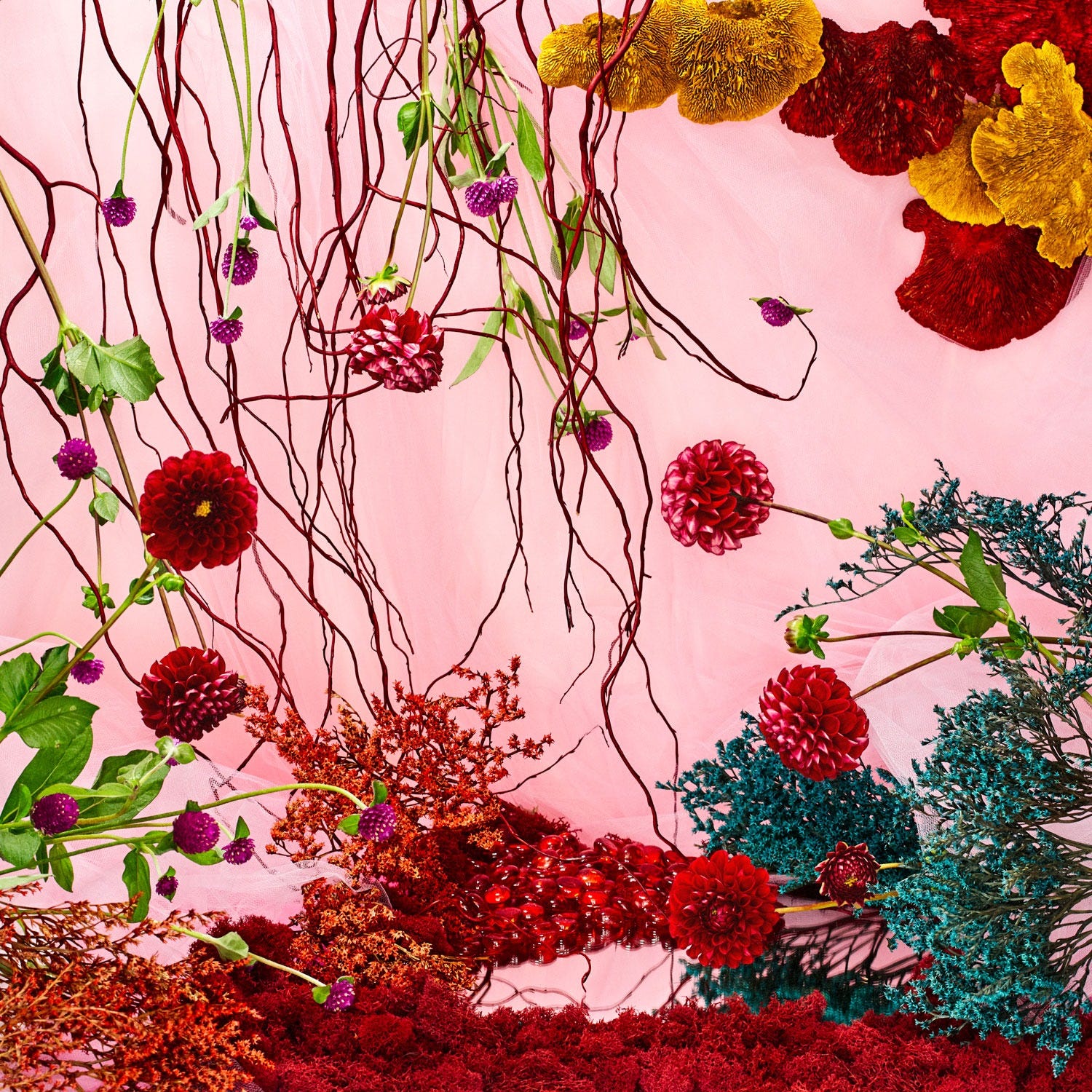
What is This World’s Delight, Desiree Pfeiffer
L: How do you visualize ideas before executing them—do you sketch, make mood boards, collect reference images, or work more intuitively?
D: I would say all of the above. For my narrative portraits, there are usually sketches and mood boards of location ideas and lighting. For the still lifes, I tend to collect a lot of reference images for inspiration. However, these reference images are rarely similar to my work and are often illustrations or paintings; I usually draw inspiration from their color combinations, shapes, and textures.
Lately, I’ve been thinking about my use of mood boards for my still lifes because I almost feel like I make them as a way to release my anxiety before embarking on a photo that is mostly improvised on the spot, like getting rid of nervous energy beforehand. It’s become part of my process, but the images are so random and inconsistent with what I’m actually creating.
L: Do you ever arrive at your subject matter indirectly via materials or textures that interest you first, then retroactively build a story around them?
D: Absolutely! I’m constantly collecting items with the idea that I’ll use them at some point. There have definitely been times when I’ve used props & materials that I’ve had sitting around for years, though I have to be thoughtful about it and not become too much of a packrat while living in a one-bedroom apartment.
Lately, I’ve been thinking about my use of mood boards for my still lifes because I almost feel like I make them as a way to release my anxiety before embarking on a photo that is mostly improvised on the spot, like getting rid of nervous energy beforehand.
L: How intentional is your use of color early in your process? Do you define a palette before you start or let it evolve as you build the set?
D: My choice of colors is definitely intentional. Color is such a powerful tool and one of my favorite aspects of the creative process. Before I start photographing, I create a color palette using Adobe Colorwheel. However, at the beginning of setting up the still life, I will take a few of the main props and place them on set to see how the colors work together, as the lighting can often make the colors appear differently once captured. I may then change the background or surface colors. It’s pretty rare for the colors to evolve after I’ve begun building the set, as it becomes cumbersome once things are carefully balanced or wired in place.
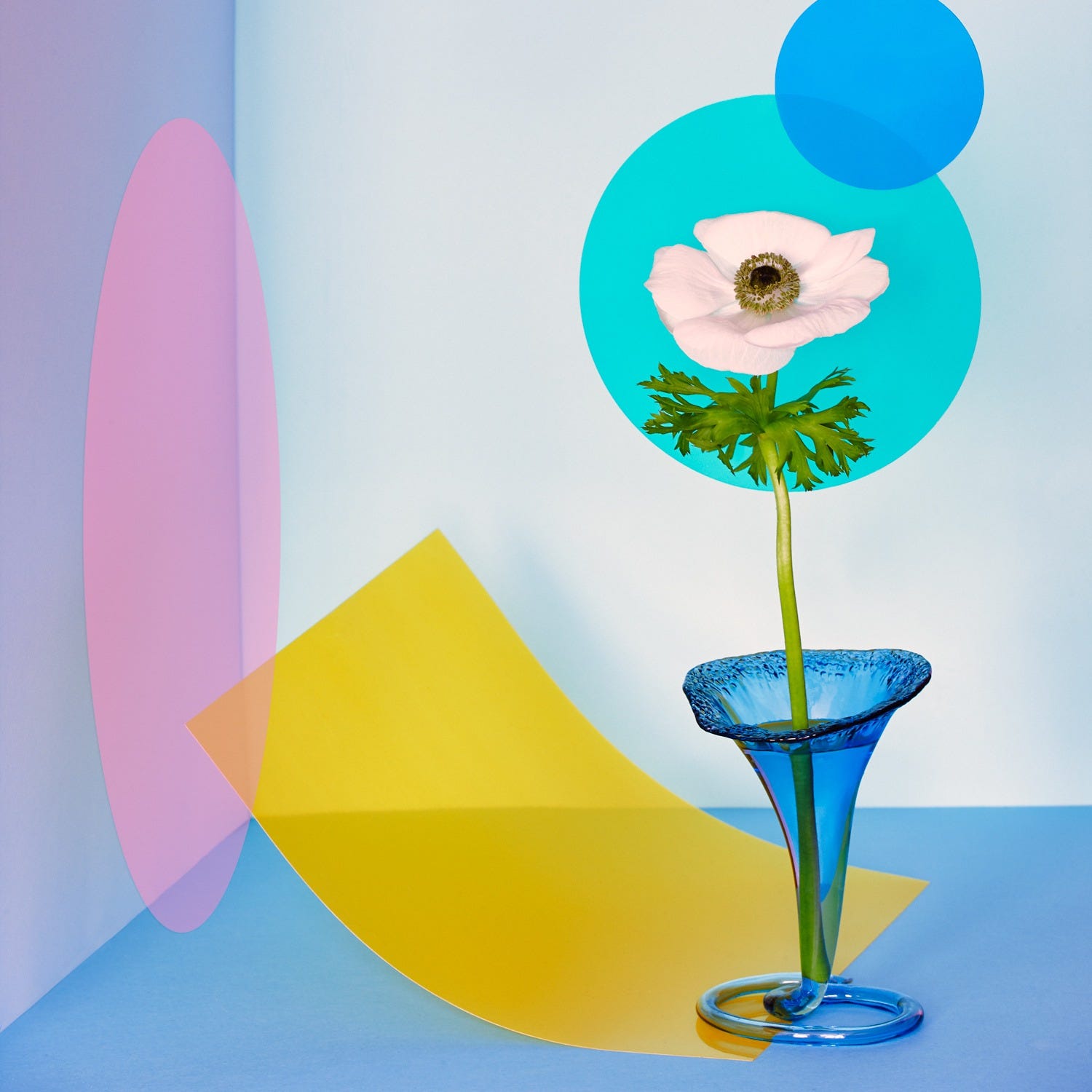
Modern Poppy, Desiree Pfeiffer
L: When you approach a portrait vs a still life, how does the storytelling shift? Do you see them as complementary or governed by different constraints?
D: I like to think they complement one another; both are very stylized with a strong emphasis on colors, but my approach to portraits and still lifes is quite different, especially when the portraits are more like tableaux or staged narratives. In these cases, everything is pre-planned, including composition and lighting; I often even follow sketches. There is also a time constraint because I’m on location and I’m working with people (models, assistants, hair, and makeup), so I need to be mindful of their time. The portraits tend to be moodier, often with personal narratives and a sense of mystery.
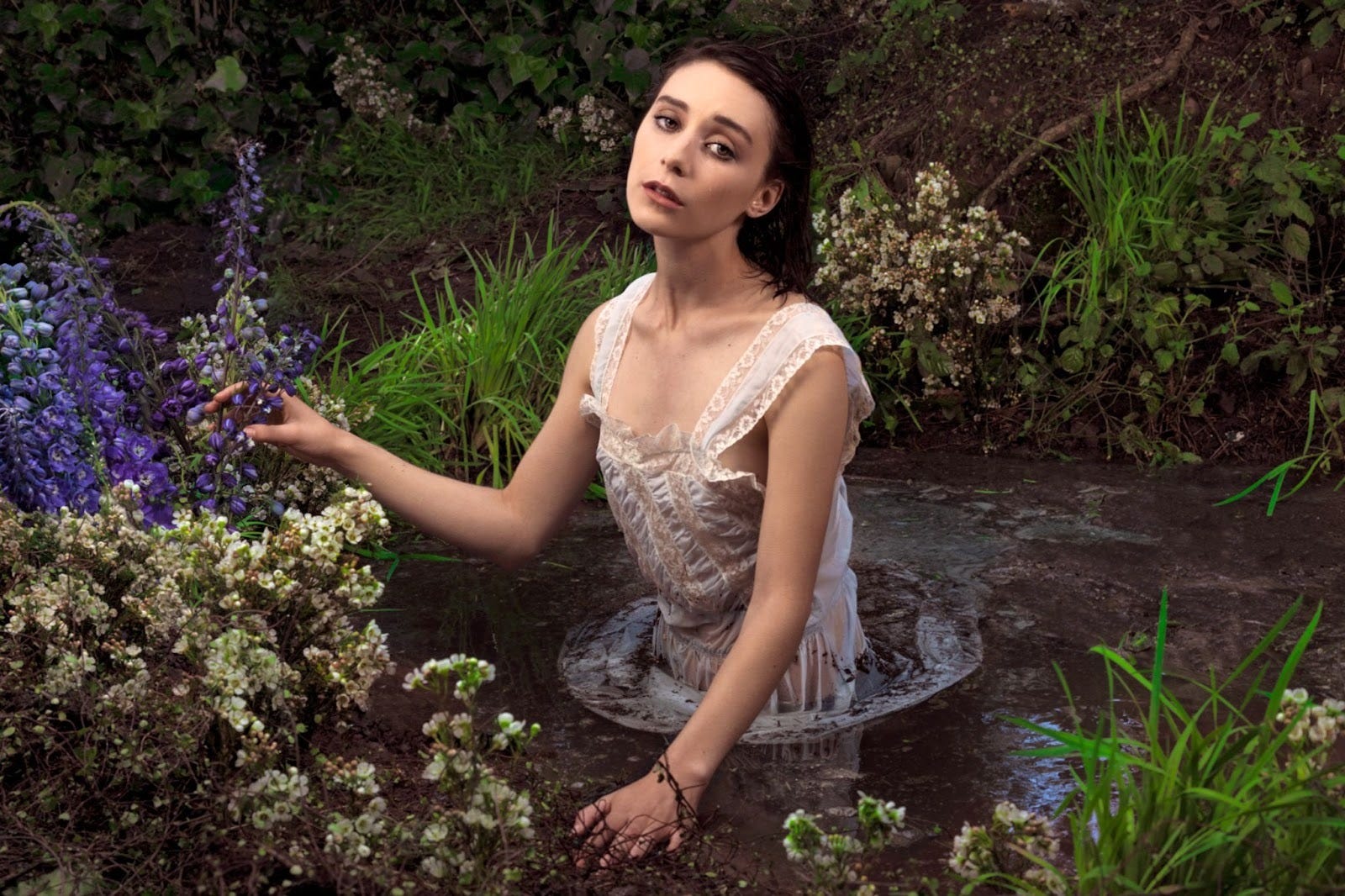
Pond, Desiree Pfeiffer
On the other hand, my still lifes are much looser, playful, and experimental. Since I create these by myself, I don’t have to worry about anyone else’s time. In addition, I’m working on a small scale in my apartment, so the cost and time are minimal compared to larger portrait sessions, which lends itself to trying out new things, sometimes mid-way through. My mindset is that if something doesn’t turn out perfectly, that’s okay; I can always try again. I attempt not to overthink and approach them more as creative exercises. While I often have a rough idea beforehand, there is a lot of improvising and following my intuition with the still lifes.
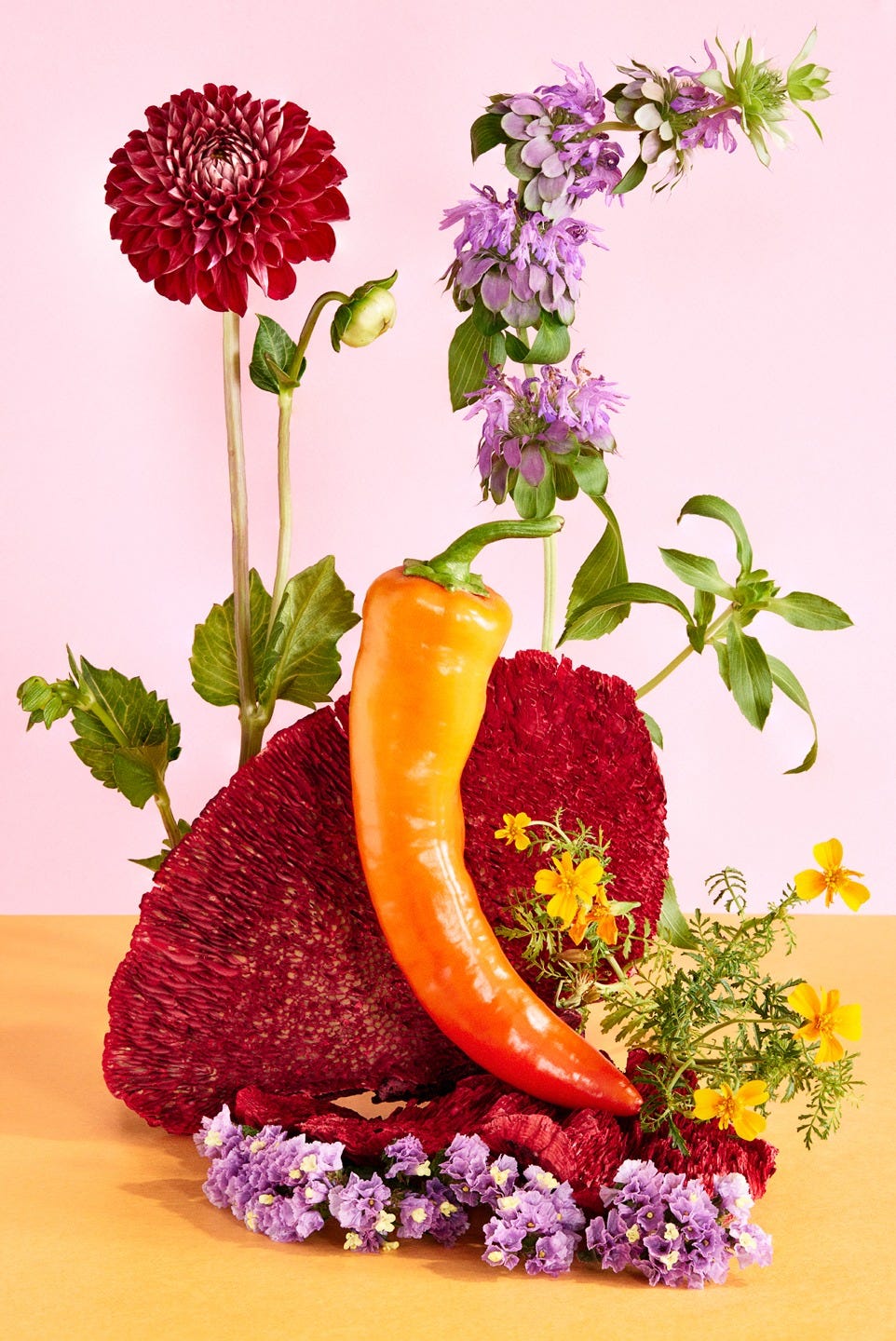
Red Pepper + Red Mushroom, Desiree Pfeiffer
Some of my still lifes contain a narrative element, but mostly they are expressions of beauty and joy, creating little environments that highlight nature, color, and shapes. Almost all of my still lifes have a botanical element to them because I feel that nature is the best art director, and I am endlessly inspired by flowers.
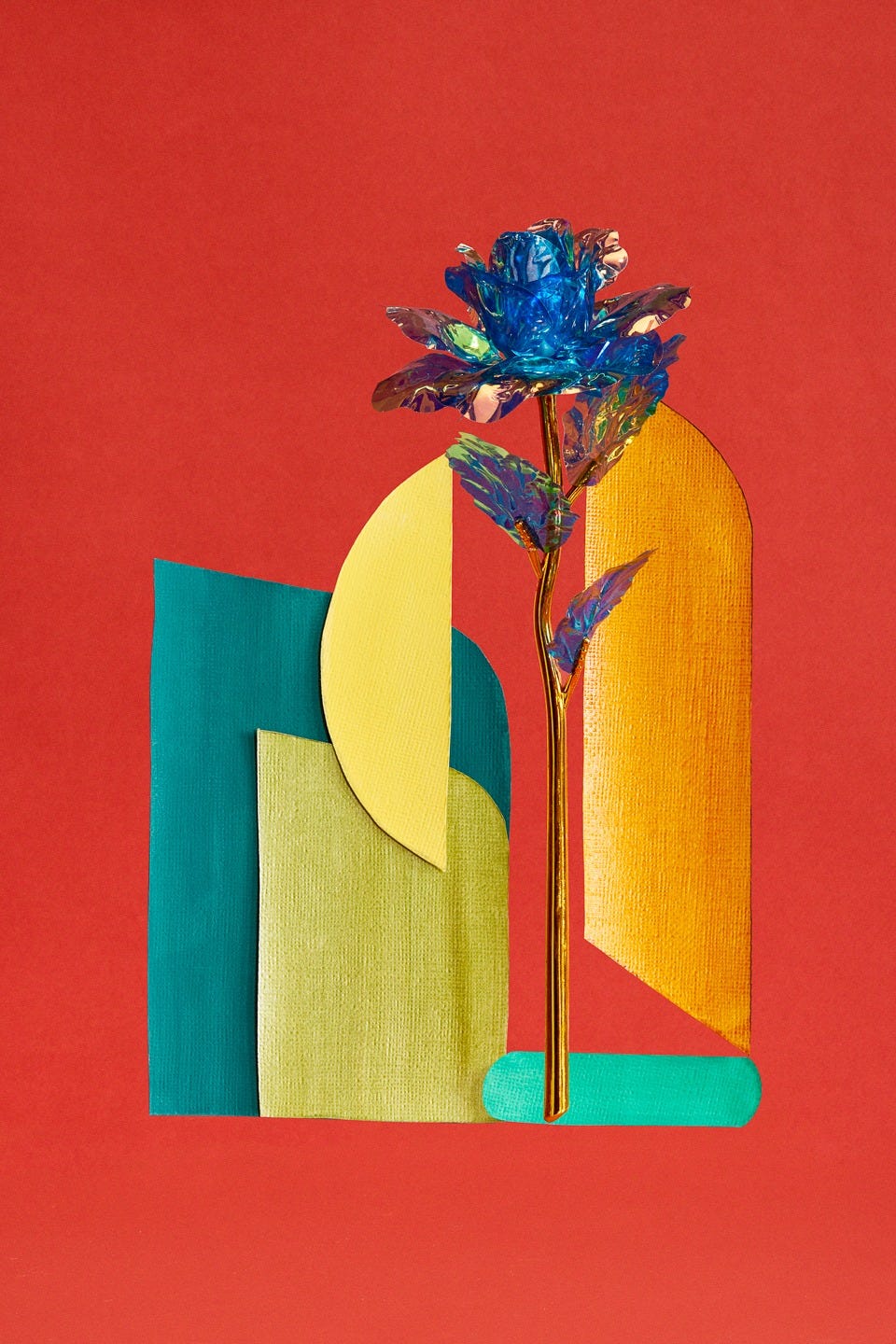
Desiree Pfeiffer
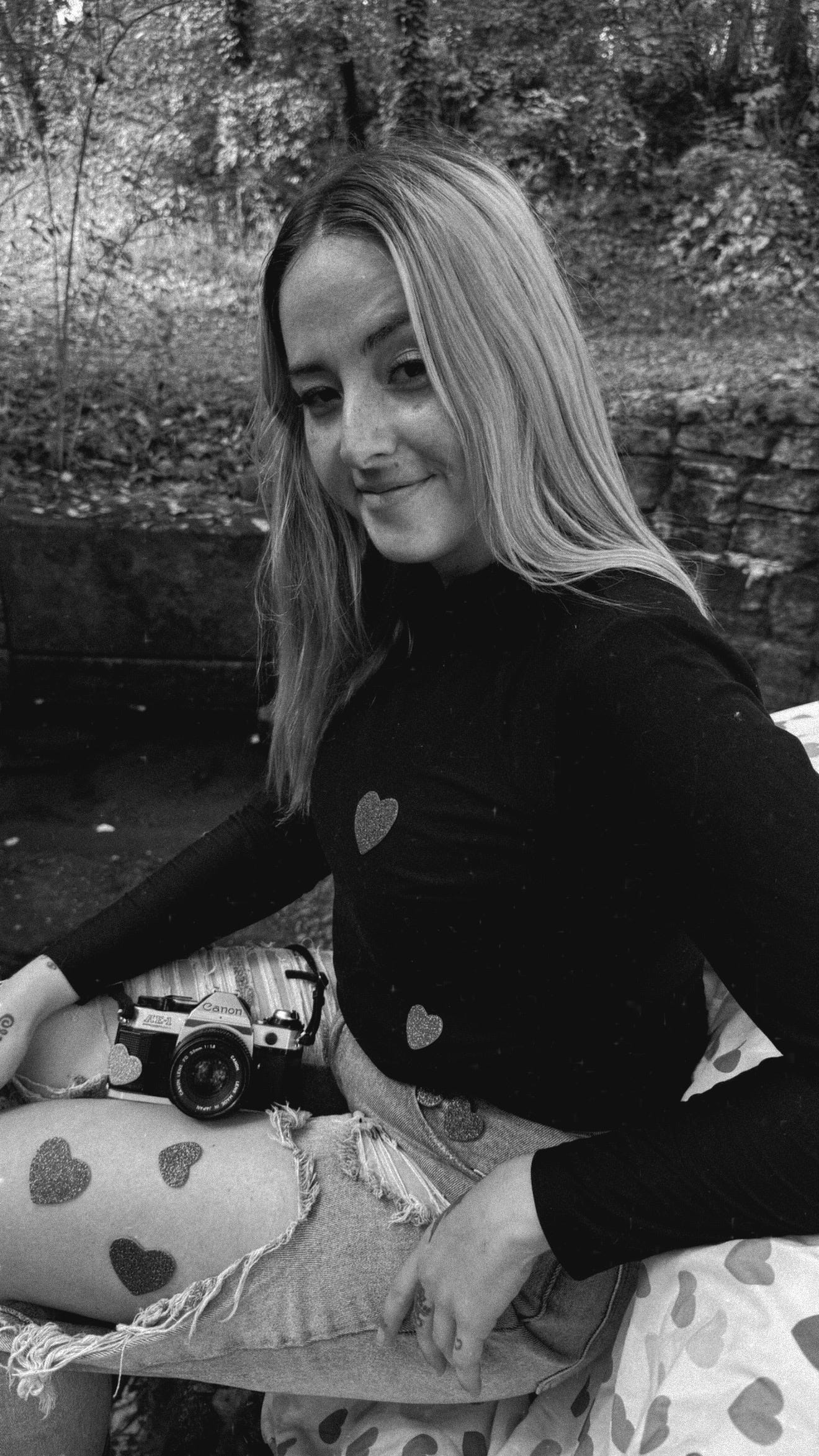
In the end, my conversation with Desiree Pfeffier mirrored the very qualities that made her artwork stand out in that sunlit gallery: honesty, curiosity, and a devotion to craft. Her insights offered a window into the delicate magic of inspiration and discipline that fuels her creative world. Walking away, I found myself grateful—not only for the beauty of her prints, but for the rare chance to glimpse the heart behind them.
Follow Desiree’s Work: Instagram @desireepfeiffer,
https://www.desireepfeiffer.com/
Written by Lea Audrey for Creative Footnotes, November 2025
Edited by MJ Ladow