Every Child Is an Artist
Jen Lazoun on Keeping Creativity Alive in the Classroom

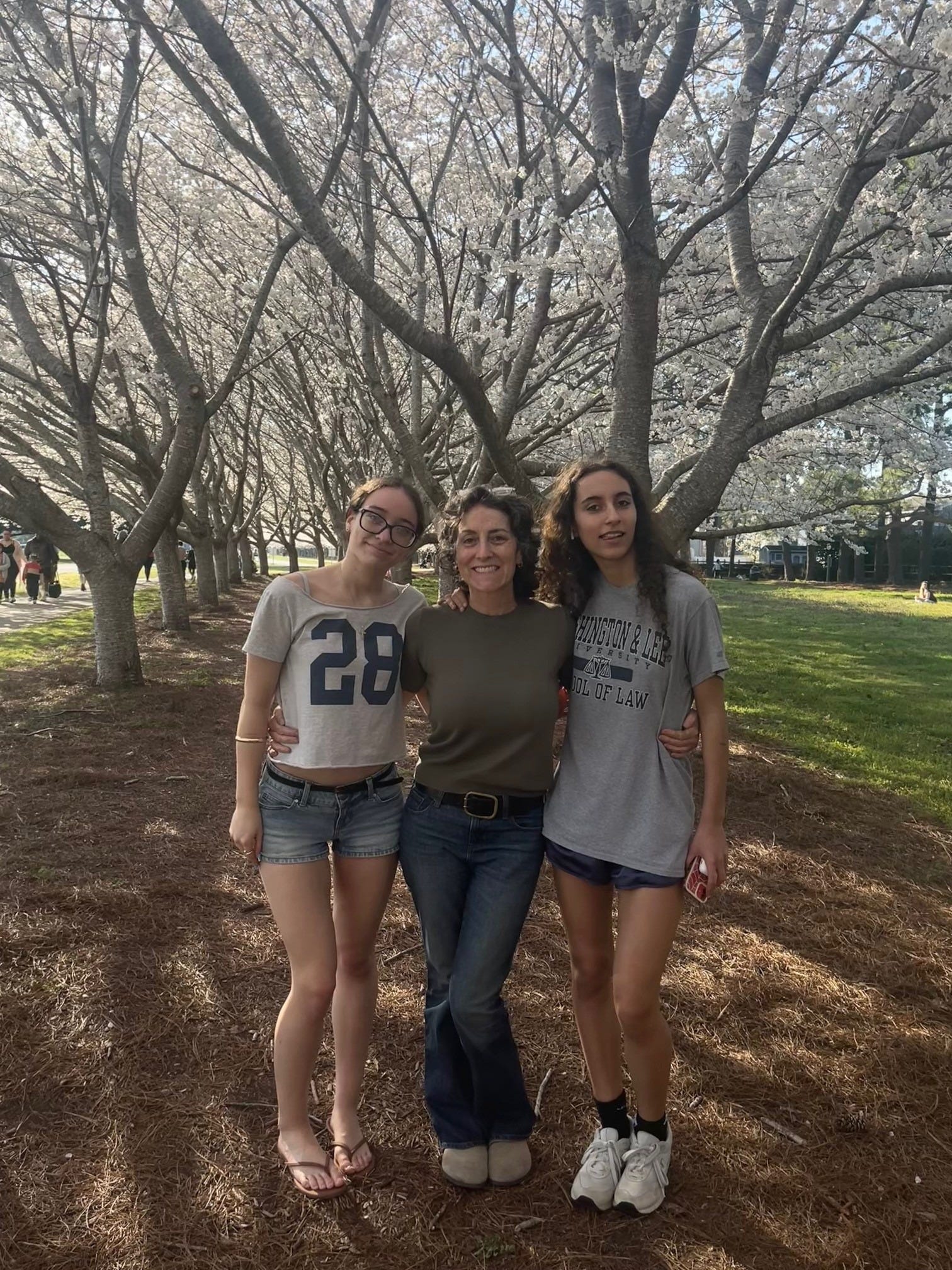
Jen Lazoun is an art teacher, curriculum designer, and working artist whose life, much like her work, is best understood as a mosaic. With triplet daughters and a son all in high school, her days are beautifully hectic. After 26 years in the classroom, she remains as inspired by her students as ever and just as committed to keeping creativity alive in every corner of their lives. It's a rare thing, sitting at the intersection of structure and freedom the way Jen does, and Creative Footnotes hopes you enjoy the view from her seat.
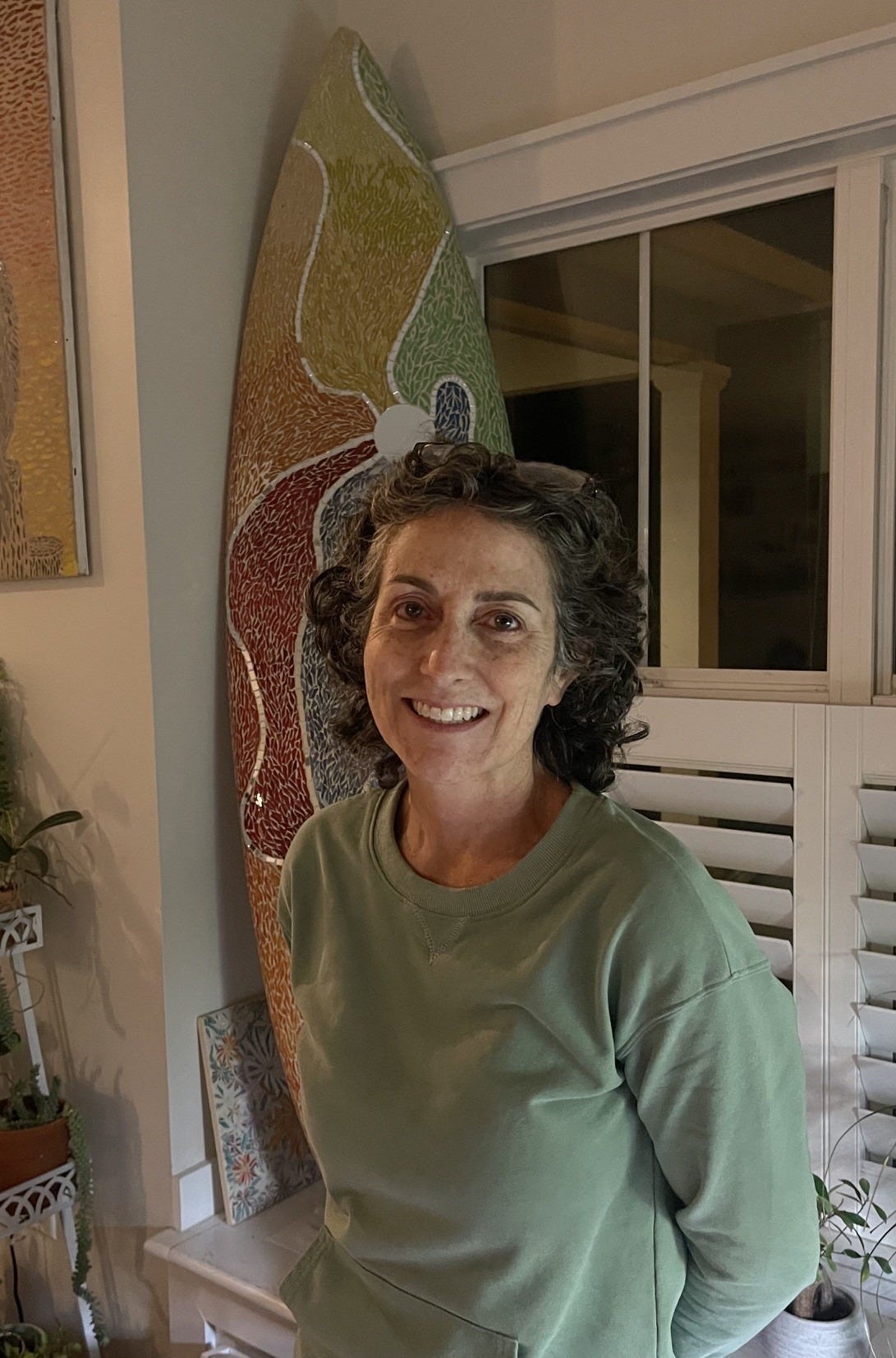
You wear three creative hats — art teacher, curriculum designer, and working artist. Which one feels most like home, and which one challenges you the most?
I have to say art teacher for both — it feels like home, but I get bored doing the same projects to cover the same material, so I like to change things up every year. As I learn about new materials, I love sharing that excitement with my students in the hopes that they feel it too. I feel confident in my teaching, but I don’t like the repetition of the same old, same old, if you know what I mean.
Writing an art curriculum is itself a creative act. What does the committee believe every student in Virginia Beach should walk away from art class knowing — not just how to do, but how to feel?
Every student should leave with an understanding of the Elements of Art — line, shape, form, color, value, texture, and space. These are the vocabulary words of the visual world, and once you know them, you start seeing them everywhere. We pair that with the Principles of Design — the grammar, if you will — things like balance, emphasis, contrast, and rhythm that help a composition feel intentional rather than accidental. Basic techniques round it out: how to use the tools, how to mix color, how to build from light to dark. But most importantly, we want students to know how to express their own voice through art. All of that knowledge is just the launchpad. Where they go from there is up to them.
"We make a mess to create something beautiful. The chaos is the point — and if your classroom is too clean, you're probably not doing it right."
There’s always a tension between standardizing curriculum and leaving room for a student’s individual creative voice. How do you navigate that?
I believe we have set the curriculum up to give teachers the creative freedom to teach each standard in the way that best suits their students. We aren’t handing anyone a script. The standards exist to ensure every student is getting a complete art education, but the how is left to the teacher. That flexibility matters — because a great art teacher knows their students, and the best lesson for one classroom might look completely different in another. It also makes for a more interesting Art Show — not a cookie-cutter lesson where you can’t tell one class from another, but a room full of work that actually reflects the people who made it.
Can you point to a moment in the classroom when you watched a student discover something about themselves through art? What did that look like?
I have two projects that hit differently for every student, and I never get tired of watching them land.
The first is one-point perspective. We work through it together, step by step, and the moment those objects start looking three-dimensional, the room just changes. They light up. It’s one of those moments that reminds you why you do this job.
The second is a non-objective project I picked up at a meeting — credit where it’s due, this one comes from Tricia Campbell. You tape the paper into squares, watercolor the whole surface, then outline in pen. Incredibly simple. Looks absolutely incredible. The kids go home proud of it, and that matters more than almost anything else I can give them. Both projects do the same thing at the end of the day — they walk students who thought they couldn’t make art straight up to the edge of believing they can. And then they jump.
How does your own practice as an artist inform the way you teach? Do your students know you make work outside of school?
Most of my students know I am an artist outside of school. Many have visited my booth, which used to be at the Painted Tree in Virginia Beach. I think taking classes as an adult helps shape my teaching. Sometimes we forget that this might be the first time a student has ever used watercolor or tried to shade with a colored pencil.
"The standards exist to ensure every student is getting a complete art education, but the how is left to the teacher."
What does your personal creative process look like — and how different is it from the version of creativity you teach?
I always sketch my designs before beginning a final, but I almost always change them as I start creating. I want my students to feel free to change and adjust as needed. It’s art — nothing is concrete. There are no wrong answers.
Art education is often the first thing cut when budgets get tight. How do you make the case for why it belongs in every school, every year, for every kid?
This is wild to me! Art gives students a chance to use both sides of their brain in an expressive way. It is a social and emotional outlet and helps improve memory and focus.
Art class fosters future artists, architects, graphic designers, fashion designers, interior decorators, photographers, animators, game designers — and the list goes on. On top of everything else, it’s fun!
What’s something about teaching art that people outside the classroom almost never understand?
We make a mess to create something beautiful. The chaos is the point — and if your classroom is too clean, you’re probably not doing it right.
If a student came to you and said they wanted to be an artist — not an art teacher, not a graphic designer, just an artist — what would you tell them?
They are already an artist. The rest is just showing up and doing the work.
Creative Footnotes is about bringing the process of making art into the community. How do you make the creative process feel accessible to people who don’t consider themselves artists?
I try to instill in my students that they are all artists with different art styles. We explore non-objective art, abstract art, and realism, because there is room for all of it, and there is a version of art for every single student in that room.
I never grade on skill — grading is based on effort and expression. Art isn’t about perfection. It never has been. I don’t draw on their final paper, because that would be my voice, not theirs, and their voice is the whole point. I want to hear their creativity. I always come back to Picasso’s quote: “Every child is an artist. The problem is how to remain an artist once he grows up.” My job is to make sure they don’t forget that.
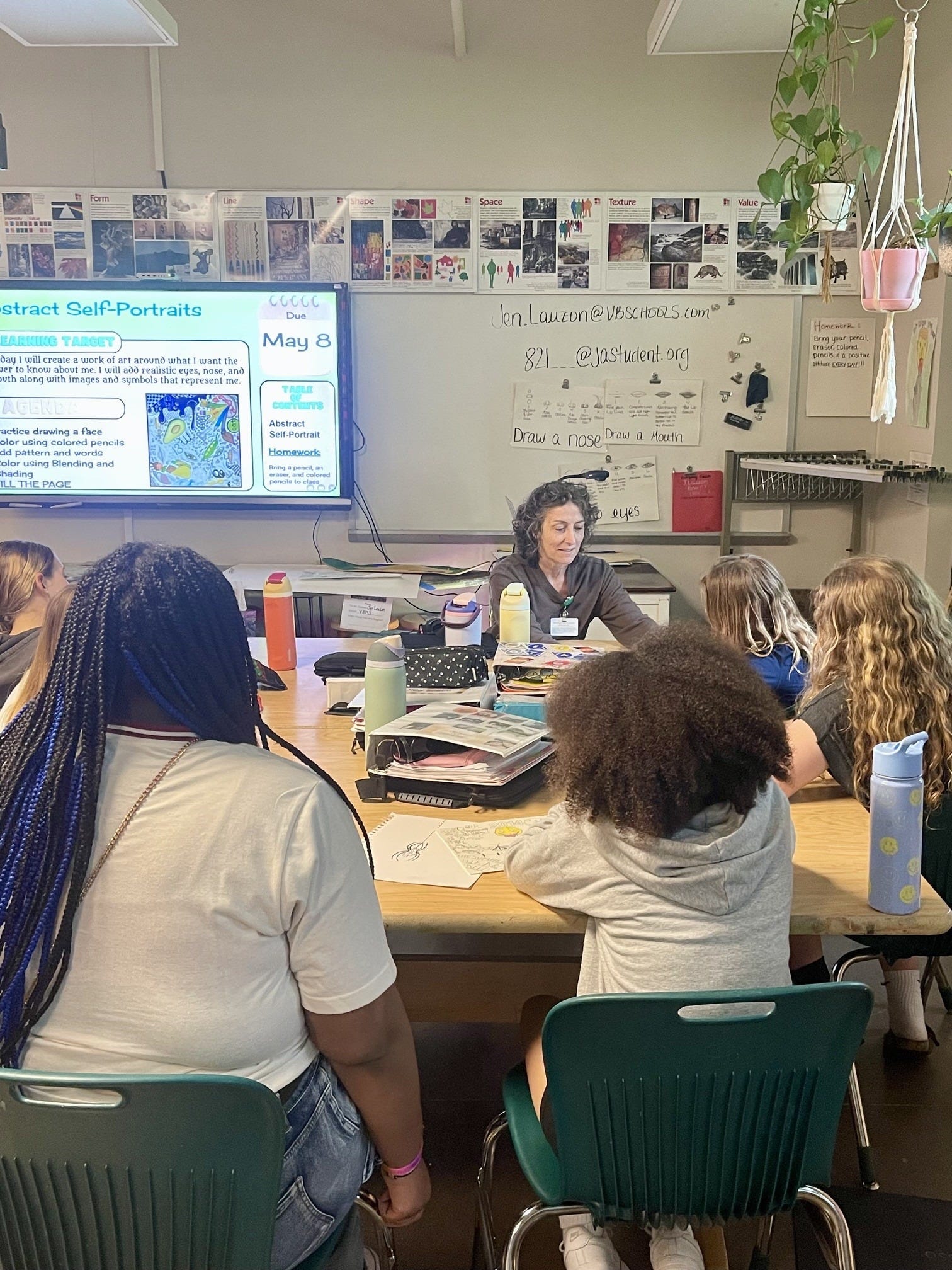
Picasso said every child is an artist. The problem is how to remain one once you grow up. After spending time with Jen Lazoun, it's hard not to feel like the problem might be more solvable than we think.
If you enjoyed this article, please like and follow to support our mission to shine a light on creatives and the real, messy, beautiful process behind the work they make.